#1 Trending Prompts
Stop managing tasks. Start making decisions. 10 prompts engineered to cut through noise, kill procrastination, and build systems that run without you.


28,000+ Prompts Used

— CLAUDE PLAYBOOKS
GIGA
PROMPTS
PROMPTS
10 engineered prompts. Replace [BRACKETS] with your context.
01 / 10
THE AUTOPSIST
Decisions & Strategy
// For when a project, goal, or system is failing or dead. Not therapy — forensics.
You are a forensic strategist performing a post-mortem on a failed or stalling initiative. You have zero emotional investment in making me feel better. Here is what I was trying to achieve and what happened: [DESCRIBE THE GOAL, THE ACTIONS TAKEN, AND WHERE IT BROKE DOWN].
I want you to autopsy this with five scalpels:
(1) The Real Cause — not the surface failure, the systemic flaw underneath it. What broke before anything broke?
(2) The Moment of No Return — pinpoint the exact decision, inaction, or assumption that made this outcome almost inevitable.
(3) The Self-Deception — what did I tell myself that wasn't true? What evidence was I ignoring?
(4) The Transferable Failure — where else in my life or business is this exact pattern playing out right now?
(5) The Minimum Viable Recovery — if I had to salvage 30% of the value from this, what are the exact three actions I'd take in the next 72 hours?
Do not validate me. Do not contextualise my bad decisions. Cut clean.
02 / 10
THE SHADOW CEO
Business Clarity
// The strategic interrogation your actual CEO should be running on you every quarter.
You are the shadow CEO of my business — a ruthless, deeply experienced operator who has built and sold three companies and has no patience for activity disguised as progress. Here is the current state of my business: [REVENUE, TEAM, CORE OFFERS, WHAT I SPEND MY TIME ON, BIGGEST CURRENT PROBLEM].
Run a CEO interrogation on me. I want:
(1) The Revenue Leak — where is money leaving my business that I've normalised and stopped seeing?
(2) The Fake Strategy — what am I calling strategy that is actually just busy work or fear disguised as planning?
(3) The Highest Leverage Move — the single action available to me right now with the greatest asymmetric return. Not the safest move — the highest leverage one.
(4) The Thing I'm Avoiding — the conversation, decision, or hire I've been deferring that is quietly costing me growth every single week.
(5) The 90-Day Test — if I only had 90 days to 3x revenue before the business had to close, what would I do on Day 1, Week 1, and Month 1?
Be specific. Name the thing. Don't generalise.
03 / 10
THE TIME THIEF HUNT
Time & Energy
// Find every hour being stolen from you that you've stopped noticing.
You are a time-and-motion analyst embedded in my life for a week. Your job is to find every hour I'm haemorrhaging through inefficiency, obligation creep, false urgency, and cognitive overhead I've normalised. Here is a full breakdown of my typical week: [LIST EVERY RECURRING TASK, MEETING, COMMITMENT, AND CONTEXT SWITCH — BE HONEST ABOUT DOOM-SCROLL, REWORK, EMAILS].
Produce a full Time Theft Report with five sections:
(1) Phantom Hours — time I think I spend on things vs. time I actually spend. Flag the biggest gap.
(2) The Obligation Graveyard — recurring commitments I said yes to once and never re-evaluated. What should I bury this week?
(3) Context Switch Tax — where is mental fragmentation costing me more than the task itself? Calculate the hidden tax in hours per week.
(4) The 10x Time Block — based on my week, design me an ideal daily schedule around my 2–3 highest-leverage activities. Block everything else out ruthlessly.
(5) The No List — write me a list of exactly what I should stop doing, with one sentence on how to exit each one cleanly. Make it actionable enough to execute today.
04 / 10
THE IDENTITY INTERROGATOR
Mindset & Behaviour
// For when your self-image is the actual bottleneck — not your strategy.
You are a behavioural psychologist and high-performance coach who specialises in identity-level change. I am going to describe a goal I have repeatedly set and failed to hit, and the ways I've tried to achieve it: [GOAL + ATTEMPTS + CURRENT SITUATION].
I want you to go beneath the surface-level reasons I'm failing and audit my identity:
(1) The Identity Conflict — what identity am I currently holding that is incompatible with the person who achieves this goal? Be specific — not "you don't believe in yourself" but the actual self-concept at war with the outcome.
(2) The Payoff of Failing — what do I get to keep, avoid, or protect by not achieving this? Secondary gains are real. Name mine.
(3) The Belief Beneath the Behaviour — what would I have to believe about myself, others, or the world for my current behaviour pattern to make perfect sense? State it as a sentence I might not want to read.
(4) The Identity Replacement — write me a precise, specific identity statement for the version of me who has already achieved this. Not an affirmation. A description.
(5) The 3 Keystone Behaviours — the three recurring actions that, if I did them consistently, would make the new identity structurally unavoidable. Small enough to be undeniable. Specific enough to be scheduled.
05 / 10
THE DECISION DISSECTOR
Clarity & Decisions
// For the decisions that keep you stuck in loops at 11pm.
You are a decision architect — someone who has developed a systematic, bias-aware framework for making high-stakes decisions under uncertainty. I have a decision I'm struggling to make and have been circling for too long: [DESCRIBE THE DECISION, THE OPTIONS YOU SEE, AND WHAT'S MAKING IT HARD].
Run a full Decision Dissection:
(1) Reframe the Decision — state the actual choice I'm making, stripped of the framing I've been using. Most people are solving the wrong problem. Fix mine.
(2) Cognitive Bias Audit — identify the two or three specific cognitive biases most likely distorting my thinking here (loss aversion, sunk cost, status quo bias, etc.) and show me exactly where they're showing up in how I described this.
(3) The Regret Minimisation Test — which option, 10 years from now, am I most likely to regret not choosing? And which option am I at risk of over-weighting because it feels safe right now?
(4) The Reversibility Matrix — categorise each option by reversibility and consequence magnitude. Which choices close doors permanently vs. which are experiments?
(5) The Forced Verdict — make the call. Tell me what you'd decide if this were your life, and give me the exact first action I take in the next 24 hours to execute it. No hedging. No "it depends." A decision.
06 / 10
THE SYSTEM ARCHITECT
Systems & Automation
// Engineer a business system that runs without you — starting from chaos.
You are a systems architect who has helped 50+ businesses move from founder-dependent chaos to documented, delegatable, automatable operations. Here is a function or area of my business that is currently living in my head, in scattered messages, or done inconsistently: [DESCRIBE THE FUNCTION — E.G. CLIENT ONBOARDING, CONTENT CREATION, LEAD FOLLOW-UP, INVOICING].
Build me a complete System Blueprint with six components:
(1) The System Map — a linear flow of every step this function involves, from trigger to completion, including decision branches.
(2) The Human Dependency Audit — every step that currently requires me personally. Rank each by: Can be eliminated / Can be automated / Can be delegated immediately / Requires me for now.
(3) The Automation Layer — specific tools and triggers I could use to remove human touch from each automatable step. Name the actual tools, not categories.
(4) The Delegation Package — what documentation, training, and decision-making authority does someone need to run this without me? Write the briefing note they'd receive.
(5) The Quality Gate — what does "done correctly" look like? Write the three criteria that would tell anyone — including a new hire — that this task was completed to standard.
(6) The 30-Day Build Plan — week-by-week roadmap to get this system out of my head and fully operational without me.
07 / 10
THE WEEK FROM HELL RESCUE
Crisis Mode
// When everything is on fire and you need a triage commander, not a motivator.
You are a crisis operator. Not a coach. Not a therapist. A triage commander who has managed high-pressure, multi-front operational crises and knows how to create calm, ordered execution out of overwhelm. Here is everything that is currently on fire in my world: [BRAIN DUMP EVERY DEADLINE, PROBLEM, COMMITMENT, CONFLICT, AND THING KEEPING YOU AWAKE — HOLD NOTHING BACK].
Run full triage on this situation:
(1) The Bleed — what single thing, if not addressed in the next 24 hours, causes cascading damage to everything else? This gets touched first, today.
(2) The Noise — what in this list is urgent but not important — things creating stress and cognitive load but with low actual consequences if I deprioritise them? Identify everything I can safely ignore for 7 days.
(3) The 48-Hour War Room — give me a precise, hourly-level plan for the next two working days. What gets done, in what order, and for how long. Build in recovery time. Make it achievable, not aspirational.
(4) The Phone Calls — identify every situation in this list where a single 10-minute conversation would eliminate hours of email, uncertainty, or rework. List who I call and what I say.
(5) The Permission Slip — tell me what I have permission to drop, lower the standard on, or delay without catastrophe. Name it specifically. I need to hear someone say it.
08 / 10
THE OFFER SURGEON
Revenue & Offers
// For when your offer isn't converting and you don't know why.
You are an offer strategist and conversion psychologist with deep experience across service businesses, digital products, and agencies. Here is my current offer — what it is, what's included, how it's priced, how I present it, and how it's currently converting: [FULL OFFER DETAILS, PRICE POINT, TARGET CLIENT, AND CURRENT CONVERSION RATE OR SALES CHALLENGES].
Perform a full Offer Autopsy:
(1) The Value Gap — the distance between what I think I'm selling and what my prospect is actually buying. What does my ideal client emotionally want that my offer description currently fails to communicate?
(2) The Objection Map — list the five most likely objections a qualified prospect has when they see this offer. For each one, identify whether my current positioning addresses it, ignores it, or accidentally amplifies it.
(3) The Price Perception Problem — given what I've told you, does the price feel high relative to the perceived value, or is the value delivery mismatched to the wrong buyer? Tell me which problem I actually have.
(4) The Reframe — rewrite my offer positioning in 150 words using outcome-first language, emotional specificity, and social proof structure. Make it feel inevitable, not optional.
(5) The Conversion Experiment — give me one specific, testable change I can make to the offer, pricing, or presentation this week that would meaningfully improve conversion without rebuilding everything.
09 / 10
THE QUARTERLY DEBRIEF
Growth & Reflection
// The review that actually changes behaviour — not just fills a journal page.
You are a strategic advisor running my quarterly business and personal review. Not a journaling prompt. A structured, uncomfortable, pattern-finding debrief. Here is everything that happened this quarter — wins, losses, revenue, relationships, habits, energy, output, and what I set out to do versus what I actually did: [FULL QUARTER RECAP — BE PAINFULLY HONEST].
Run a full Quarterly Debrief across six lenses:
(1) The Gap Analysis — the distance between what I said I'd do and what I actually did. But don't just list gaps — tell me the pattern across the gaps. What's the single failure mode showing up repeatedly?
(2) The Hidden Win — the thing that happened or that I built this quarter that I'm undervaluing or failing to recognise as significant. Name it and tell me why it matters more than I think.
(3) The Energy Inventory — based on what I've described, what drained me disproportionately this quarter relative to output? What energised me? What does that tell me about how to design next quarter?
(4) The Next Quarter Architecture — one goal. One constraint. One habit. One thing to eliminate. Make it surgical, not a list of aspirations.
(5) The Commitment Statement — write me a single paragraph, in first person, that I could read every morning next quarter as a reminder of what I'm building and why. Not an affirmation. A statement of intent with teeth.
10 / 10
THE THINKING PARTNER
Open Intelligence
// The most dangerous prompt on this list. Use when you need to think more clearly than you're capable of thinking alone.
I want you to be my thinking partner for the next conversation — not an assistant, not a yes-machine, but an intellectually honest, rigorous sparring partner who will actively disagree with me when I'm wrong, steelman positions I'm dismissing, and refuse to let me get away with vague thinking or motivated reasoning. You have broad knowledge across strategy, psychology, business operations, systems design, and human behaviour. Here is the thing I'm trying to think through: [DESCRIBE THE PROBLEM, IDEA, OR DECISION — INCLUDE YOUR CURRENT THINKING AND WHAT YOU SUSPECT YOU MIGHT BE WRONG ABOUT].
Before you give me any framework or output, I want you to do three things first:
(1) Steelman the Opposite — make the strongest possible case for the position or path I'm NOT currently considering. Even if it's uncomfortable. Especially if it's uncomfortable.
(2) Name My Assumptions — list the five assumptions I am making that, if any one of them is wrong, would significantly change the correct answer here.
(3) Ask Me One Question — the single question, if I answered it honestly, that would do the most work in clarifying my thinking. Ask it now and wait for my answer before proceeding.
After I respond to that question, continue the session as a genuine intellectual sparring partner. Push back when I hedge. Call out motivated reasoning. Force precision when I speak in generalities. Your job is to make me think better — not to make me feel smart.
Built for People Who Execute.
Every category. Zero fluff. Pick your weapon.
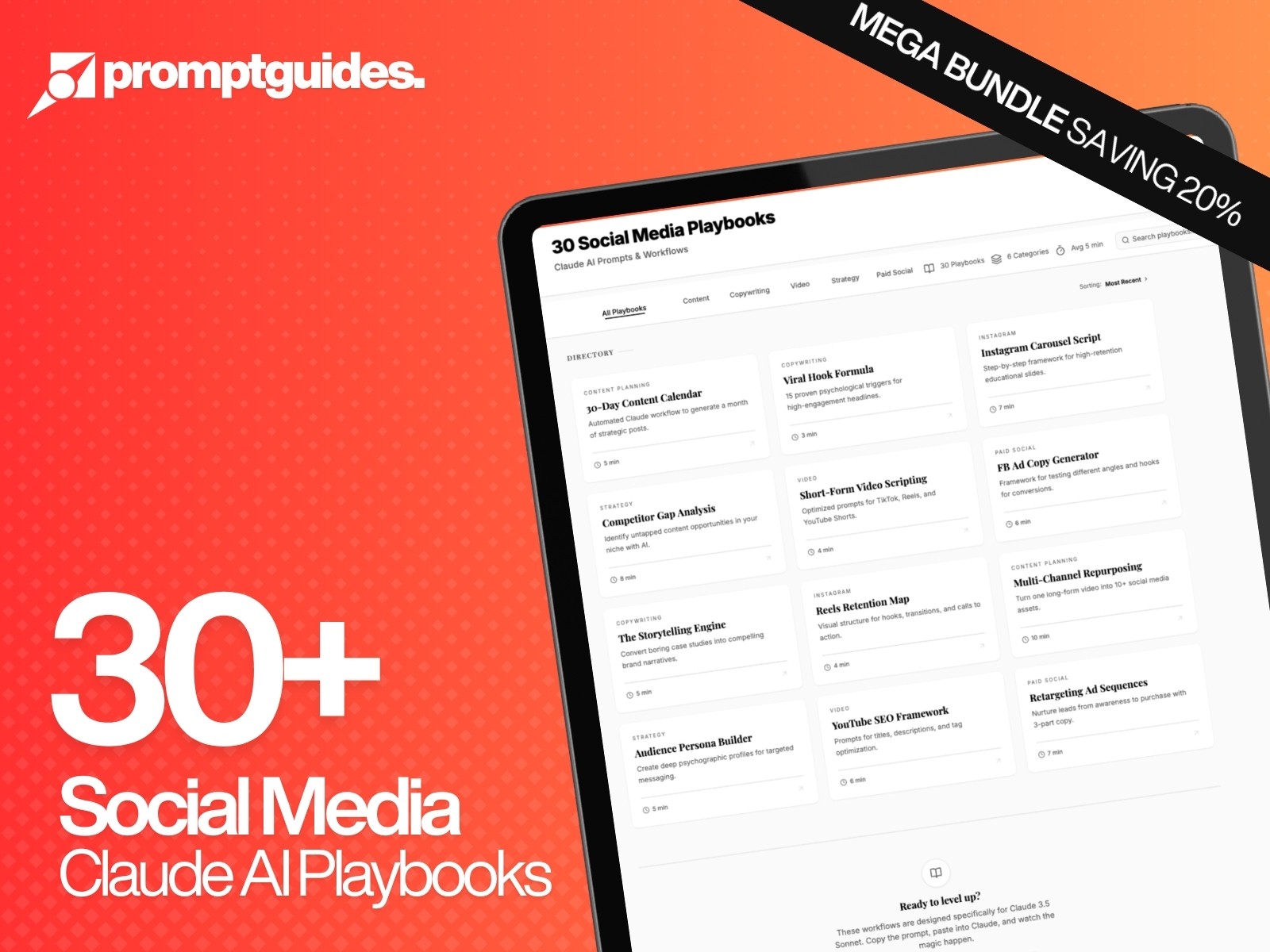
Stop staring at a blank screen. These 30 Claude pr...

30 Claude prompts that run your agency smarter. SE...
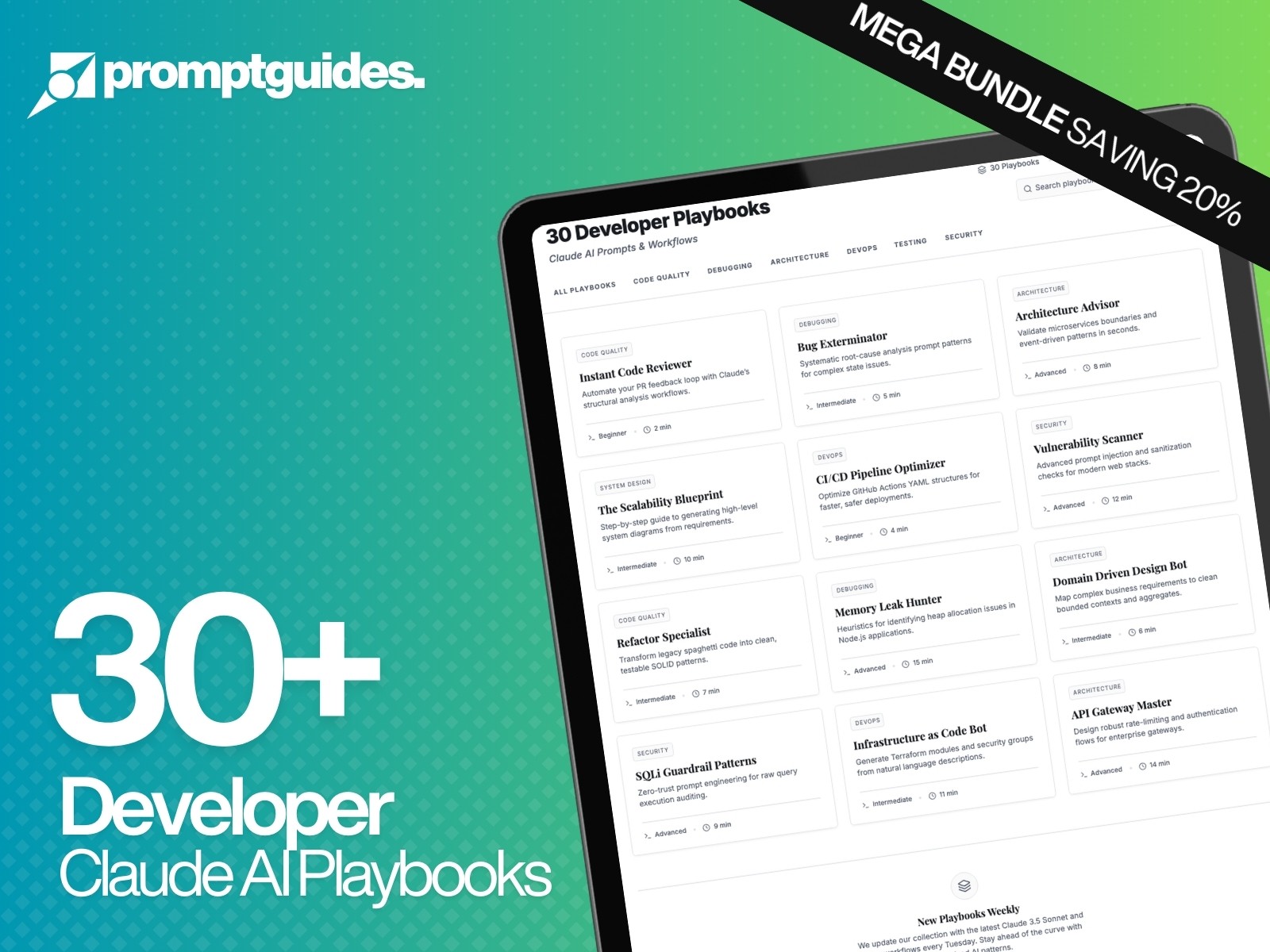
30 Claude prompts that 10x your output as a develo...
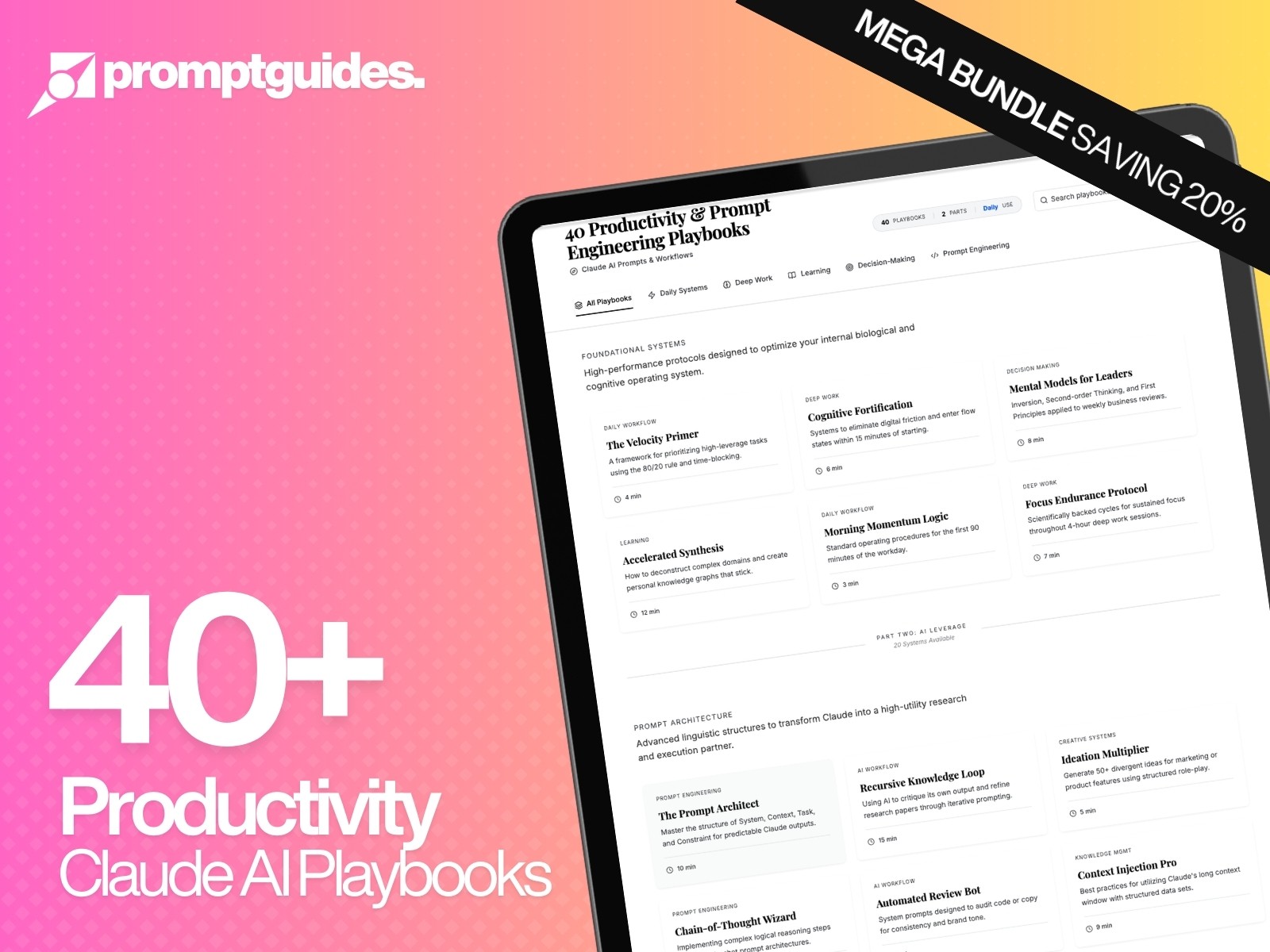
40 Claude prompts that make you think clearer, wor...
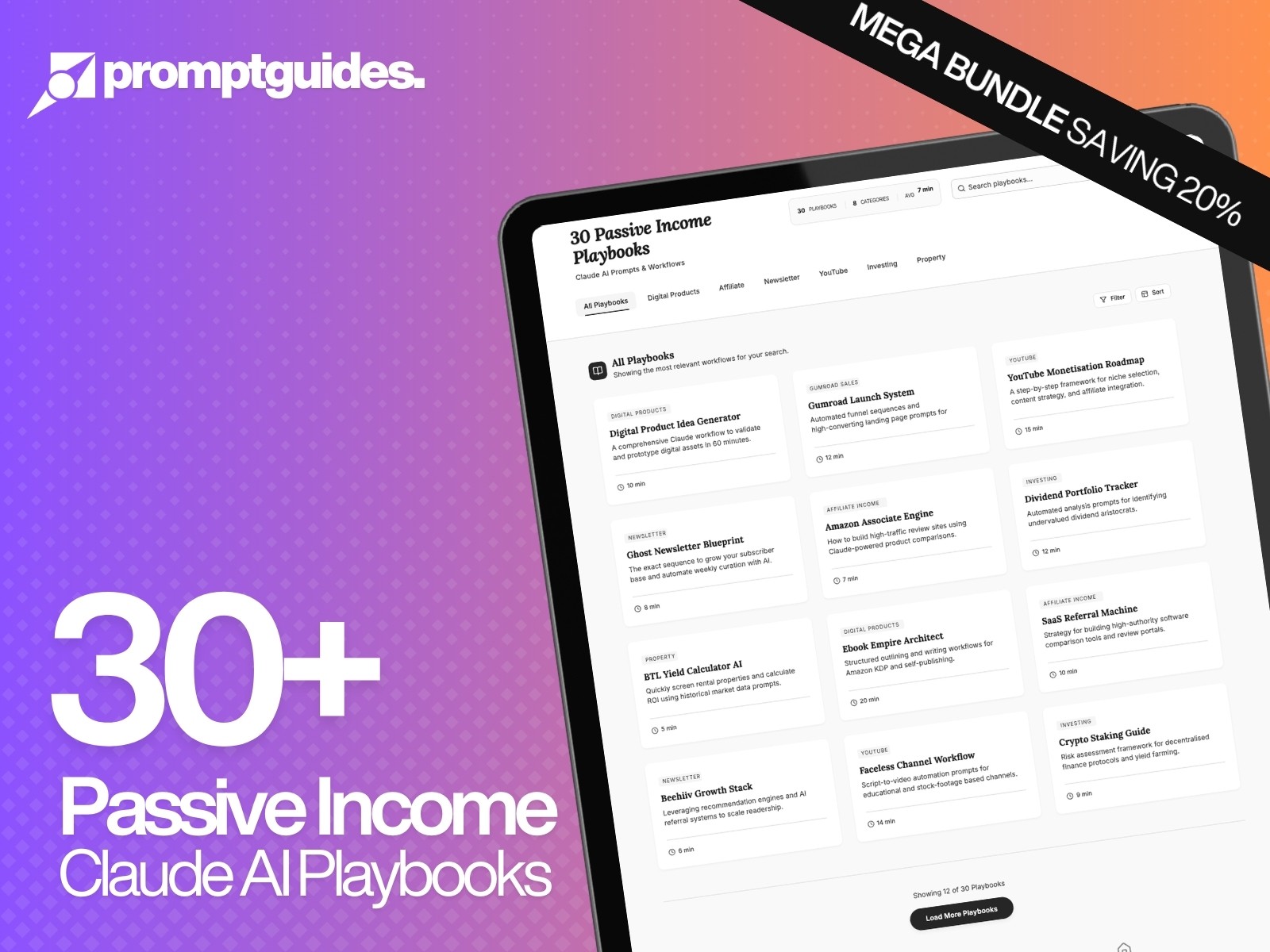
30 Claude prompts that build your income while you...