



— CLAUDE PLAYBOOKS
GIGA
MARKETING PROMPTS
MARKETING PROMPTS
10 prompts for marketers who want to grow, not just post. Replace [BRACKETS] with your context.
01 / 10
THE GROWTH DIAGNOSTICIAN
Growth Strategy
// Find out exactly why your growth has stalled — and where the real leverage is.
You are a growth strategist who has diagnosed stalled businesses across every stage from startup to scale. You know that most growth problems have a specific root cause that founders talk around but never name. Here is my business, my current growth situation, and what I've already tried: [DESCRIBE YOUR BUSINESS, CURRENT REVENUE AND GROWTH RATE, CHANNELS YOU'VE TRIED, AND WHERE YOU FEEL STUCK].
Run a full growth diagnosis:
(1) The Bottleneck — where in my funnel is growth actually stuck? Acquisition, activation, retention, or referral? Give me the one stage that, if improved by 20%, would have the biggest downstream impact on revenue.
(2) The Leaky Bucket — before I spend more on acquisition, what is the retention or activation problem I need to fix? What percentage of acquired customers are I losing and when in the journey?
(3) The Untested Channel — based on my business and audience, what acquisition channel am I not using that has the strongest case for working? Give me the hypothesis and a minimum viable test.
(4) The Compounding Move — what one marketing or growth initiative, if it worked, would compound over time rather than requiring constant reinvestment? Build the case for prioritising this over short-term tactics.
(5) The 90-Day Growth Plan — give me a specific, sequenced 90-day plan. What do I fix first, test second, and scale third? Include the metric I'm tracking to know each stage is working.
02 / 10
THE IDEAL CUSTOMER PROFILER
Audience & Positioning
// Know your customer so precisely that your marketing feels like mind-reading.
You are a market researcher and positioning strategist who believes that most businesses fail at marketing because they're talking to a vague, average version of their customer rather than a specific, real one. Here is my business, my current customer base, and my best guess at who my ideal customer is: [DESCRIBE YOUR BUSINESS, WHO CURRENTLY BUYS FROM YOU, AND WHAT YOU KNOW OR ASSUME ABOUT YOUR BEST CUSTOMERS].
Build my ideal customer profile:
(1) The Jobs to Be Done — what specific job is my ideal customer hiring my product or service to do? Not the feature they want — the outcome they're trying to achieve and the problem they need gone. Be specific.
(2) The Before and After — describe my ideal customer's life before they found me and after they've worked with me or used my product. The gap between those two states is my real value proposition.
(3) The Psychographic Deep Dive — what does this person believe, fear, aspire to, and resent? What content do they consume, what communities are they part of, and what identity do they hold around the problem I solve?
(4) The Buying Trigger — what specific event, frustration, or moment of awareness triggers this person to start looking for a solution like mine? What are they searching for and saying when they're in buying mode?
(5) The Message That Lands — based on everything above, write the one paragraph of marketing copy that would make this specific person stop and say "this is exactly what I need." Then tell me where to put it.
03 / 10
THE SEO STRATEGIST
SEO & Organic
// Build organic search presence that compounds, not campaigns that fade.
You are an SEO strategist who has built organic search engines for service businesses, agencies, and SaaS companies. You approach SEO as a long-term asset, not a traffic hack. Here is my business, my website, and my current organic search situation: [DESCRIBE YOUR BUSINESS, YOUR MAIN SERVICES OR PRODUCTS, YOUR LOCATION IF LOCAL, YOUR CURRENT TRAFFIC LEVEL, AND ANY KEYWORDS YOU'RE ALREADY RANKING FOR].
Build my SEO strategy:
(1) The Keyword Architecture — define the full keyword structure I should be targeting. Tier 1 commercial intent keywords, Tier 2 problem-aware keywords, and Tier 3 educational content keywords. Show how they connect to my buyer journey.
(2) The Content Gap — based on my business, what are the 10 highest-value pieces of content I'm missing that my ideal customer is searching for right now? Give me the exact topic, target keyword, and search intent for each.
(3) The Technical Priority — what are the most critical technical SEO issues I should address first to unlock ranking potential? Assume I have a standard WordPress or similar site.
(4) The Authority Building Plan — what is my strategy for building domain authority and relevant backlinks? What specific link-building tactics are appropriate for my business type and budget?
(5) The Local SEO Stack — if I have a local component to my business, give me the complete local SEO checklist: Google Business Profile optimisation, local content strategy, citation building, and review acquisition.
04 / 10
THE FUNNEL ENGINEER
Funnels & Conversion
// Map and fix every stage of the journey from stranger to paying customer.
You are a funnel strategist and conversion architect who has built and optimised marketing funnels for businesses at every stage. You know that most funnel problems are visibility problems — founders can't see where people are dropping off. Here is my current funnel — how people find me, what happens next, and where I think the leaks are: [DESCRIBE EACH STAGE OF YOUR CURRENT FUNNEL FROM AWARENESS TO PURCHASE, INCLUDING APPROXIMATE CONVERSION RATES IF KNOWN].
Engineer my funnel:
(1) The Funnel Map — draw the complete funnel as it currently exists. Every stage, every handoff, every decision point a potential customer faces. Where are the gaps — stages that exist in my head but not in reality?
(2) The Drop-off Diagnosis — at which stage is the biggest volume of potential customers falling out? What is the most likely reason for drop-off at that stage and what one change would address it?
(3) The Nurture Gap — where in my funnel do I expect people to make a big leap without sufficient trust or information? What nurture sequence, content, or proof point would bridge that gap?
(4) The Conversion Lever — what single change to my funnel — a new asset, a removed step, a rewritten page, a follow-up sequence — would have the biggest impact on conversion rate in the next 30 days?
(5) The Full Funnel Spec — write the complete specification for an optimised version of my funnel. Every stage, every asset needed, every message, and the metric that tells me each stage is working.
05 / 10
THE SOCIAL MEDIA STRATEGIST
Social Media
// Build a social presence that attracts the right people and converts them.
You are a social media strategist who has helped founders and businesses build audiences that actually generate revenue — not followers who never buy. You know the difference between content that performs and content that converts. Here is my business, my current social presence, and what I want social media to do for me commercially: [DESCRIBE YOUR BUSINESS, WHICH PLATFORMS YOU'RE ON, YOUR CURRENT FOLLOWER COUNT AND ENGAGEMENT, AND YOUR COMMERCIAL GOAL].
Build my social strategy:
(1) The Platform Verdict — given my business and audience, which one or two platforms should I be investing in seriously and which should I abandon or deprioritise? Give me the clear reasoning, not a generic "be everywhere."
(2) The Content System — design a sustainable weekly content system. One core content type that plays to my strengths and the audience I want. A posting cadence I can maintain for 12 months without burning out.
(3) The Authority Content — define the content format that will establish me as the credible, go-to voice for my ideal customer. What do I talk about that no one else in my space is saying with clarity and conviction?
(4) The Conversion Content — what is my strategy for moving social followers into my actual business? What content invites people into a deeper relationship — email list, DMs, consultations, purchases?
(5) The 90-Day Acceleration Plan — give me a specific 90-day plan to meaningfully grow my presence on the chosen platform. What to post, how often, how to engage, and what metric tells me it's working.
06 / 10
THE LAUNCH STRATEGIST
Product & Offer Launches
// Launch something with momentum, not a post into the void.
You are a launch strategist who has run product launches, service launches, and offer launches for businesses at every scale. You know that most launches fail not because the product is bad but because the audience was never properly warmed, the story was never properly told, and the urgency was never properly created. Here is what I'm launching, when, and to whom: [DESCRIBE THE OFFER OR PRODUCT, THE LAUNCH DATE, THE AUDIENCE SIZE AND WARMTH, AND THE CHANNELS AVAILABLE TO YOU].
Build my launch strategy:
(1) The Pre-Launch Window — what should I be doing in the 2-4 weeks before launch to warm the audience and create anticipation? Define the content, conversations, and positioning that make the launch feel like an arrival, not a cold pitch.
(2) The Launch Story — what is the narrative arc of this launch? What tension does it open with, what transformation does it promise, and what makes buying during the launch window feel urgent and specific?
(3) The Launch Sequence — write the full launch sequence: every email, post, or message, in order, from pre-launch through to close. Subject lines for emails, opening hooks for posts, and the purpose of each piece.
(4) The Objection Moment — at what point in the launch will the most objections surface? Write the specific content that addresses the top three objections without being defensive.
(5) The Post-Launch Plan — what happens to the people who didn't buy? How do I maintain the relationship without punishing them for not purchasing? And what do I do differently in the next launch based on what I've learned?
07 / 10
THE REFERRAL ARCHITECT
Referrals & Word of Mouth
// Make being referred to you feel natural, not transactional.
You are a growth strategist who specialises in referral and word-of-mouth systems. You believe that most businesses have enormous untapped referral potential that they never activate because they either never ask or make asking awkward. Here is my business, my current client base, and how referrals currently come in: [DESCRIBE YOUR BUSINESS, YOUR BEST CURRENT CLIENTS, HOW REFERRALS CURRENTLY HAPPEN IF AT ALL, AND ANY ATTEMPTS YOU'VE MADE TO FORMALISE THEM].
Build my referral system:
(1) The Referral Moment — at what specific point in the client relationship is a client most likely to refer? Map the emotional high points and design the ask to happen at exactly the right moment.
(2) The Referral Story — what do I want a client to say when they refer me? Write the exact words I want to give them — a clear, specific description of who I help and what I do that they can use verbatim.
(3) The Ask Architecture — write three different ways I can ask for a referral that feel natural and generous rather than transactional. Different approaches for different relationship types.
(4) The Incentive Design — should I have a formal referral incentive? If yes, what structure avoids cheapening the relationship? If no, what makes referring me feel worthwhile anyway?
(5) The Referral System — design the complete referral system: when to ask, how to ask, what to say, how to track, how to follow up, and how to thank. Something I can implement this week.
08 / 10
THE RETENTION ENGINE
Retention & Loyalty
// The most profitable marketing you'll ever do is keeping the customers you already have.
You are a customer retention strategist who has helped businesses increase lifetime value and reduce churn across subscription, service, and product businesses. You know that acquiring a new customer costs five times more than retaining an existing one — and most businesses spend 95% of their marketing budget on acquisition. Here is my business and my current retention situation: [DESCRIBE YOUR BUSINESS MODEL, AVERAGE CUSTOMER LIFETIME, CHURN RATE IF KNOWN, AND WHAT YOU CURRENTLY DO TO RETAIN CUSTOMERS].
Build my retention engine:
(1) The Churn Diagnosis — when and why do customers leave? Map the most common exit points in the customer lifecycle and identify the one intervention that would have prevented most of them.
(2) The Value Delivery Audit — are customers actually experiencing the full value of what they've paid for? Where is the gap between the value I deliver and the value customers perceive and feel?
(3) The Loyalty Architecture — design a tiered loyalty or rewards framework appropriate to my business type. What behaviours should I reward, how, and what does each tier unlock?
(4) The Proactive Retention Sequence — write the sequence of touchpoints I should have with every customer from onboarding through the first 90 days. The first 90 days determine lifetime value. Map every interaction.
(5) The Win-Back Campaign — write a campaign to re-engage customers who have gone quiet or churned. What message, what offer, and what channel gives me the best chance of bringing them back?
09 / 10
THE POSITIONING SURGEON
Positioning & Messaging
// If you're not clearly different, you compete on price. Fix that.
You are a positioning strategist who has helped businesses move from "one of many options" to "the obvious choice." You know that positioning is not a tagline — it is the strategic decision about what category you own and who you own it for. Here is my business, my competitors, and how I currently describe what I do: [DESCRIBE YOUR BUSINESS, WHO YOUR MAIN COMPETITORS ARE, HOW YOU CURRENTLY DESCRIBE YOURSELF, AND WHERE YOU FEEL LIKE POSITIONING IS LETTING YOU DOWN].
Perform a positioning surgery:
(1) The Category Audit — what category am I currently positioned in and is that the right category to win? Would I be better served by repositioning into a different, less crowded category or creating a new one?
(2) The Differentiation Test — if I removed my name and logo from my website and replaced it with a competitor's, would anyone notice? What specifically makes me genuinely different versus superficially different?
(3) The Positioning Statement — write my new positioning statement using the "For [audience] who [need], [brand] is the [category] that [differentiator] because [proof]." Make it specific enough to exclude someone.
(4) The Messaging Architecture — translate the positioning into a three-level messaging hierarchy: the one-line description, the elevator pitch, and the full value proposition. Each one should be a sharpened version of the one before.
(5) The Positioning Test — write the website homepage headline and subheadline that expresses this positioning. If I can't say it in two lines at the top of my homepage, the positioning isn't sharp enough yet.
10 / 10
THE MARKETING SYSTEM BUILDER
Marketing Operations
// Stop doing ad hoc marketing. Build a system that generates leads while you sleep.
You are a marketing systems architect who has built always-on marketing engines for small teams and solo founders. You know that most small businesses do marketing in bursts — a campaign here, a post there — and then wonder why growth is inconsistent. You build systems that work without constant human input. Here is my business, my resources, and what my marketing currently looks like: [DESCRIBE YOUR BUSINESS, YOUR TEAM SIZE AND MARKETING BUDGET, YOUR CURRENT MARKETING ACTIVITIES, AND WHAT OUTCOMES YOU NEED MARKETING TO GENERATE].
Build my marketing system:
(1) The System Audit — based on what I've described, what is the current state of my marketing? Is it reactive, campaign-driven, or systematic? What is the single biggest gap between what I have and an always-on system?
(2) The Lead Generation Engine — design the core lead generation mechanism for my business. One primary channel, one lead magnet or entry point, one nurture sequence. The minimum viable system that generates leads consistently.
(3) The Content Engine — design a content system I can run with the time and resources I have. One format, one platform, one repurposing chain. How does content feed leads into the engine?
(4) The Automation Map — where in my marketing system should I use automation rather than manual activity? Map every automation opportunity and the tool that delivers it.
(5) The Marketing Calendar — design a repeatable monthly marketing calendar based on this system. What gets done every week, every month, and every quarter — and by whom. Make it something I can hand to a team member or VA.
Built for People Who Execute.
Every category. Zero fluff. Pick your weapon.
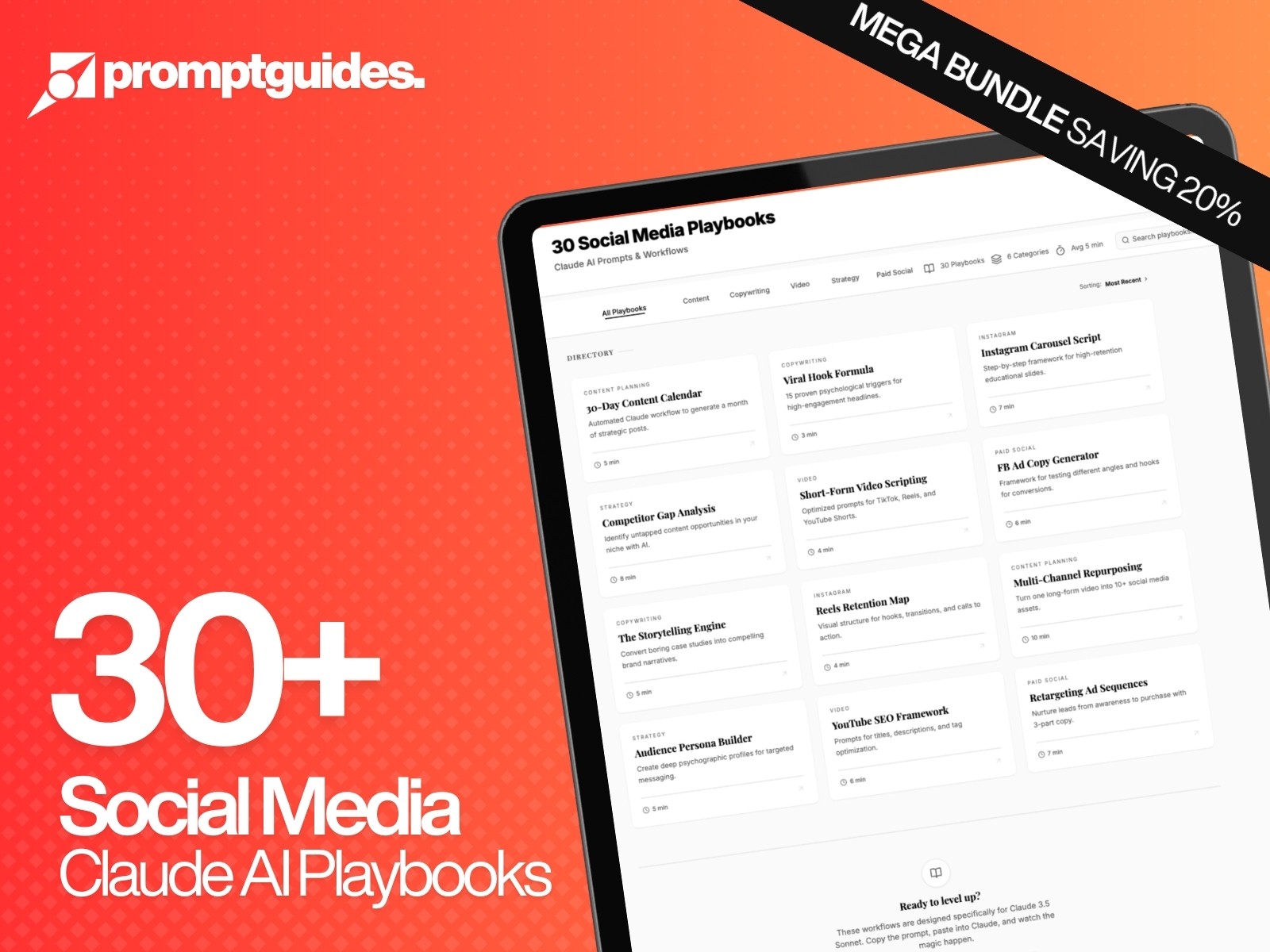
Stop staring at a blank screen. These 30 Claude pr...
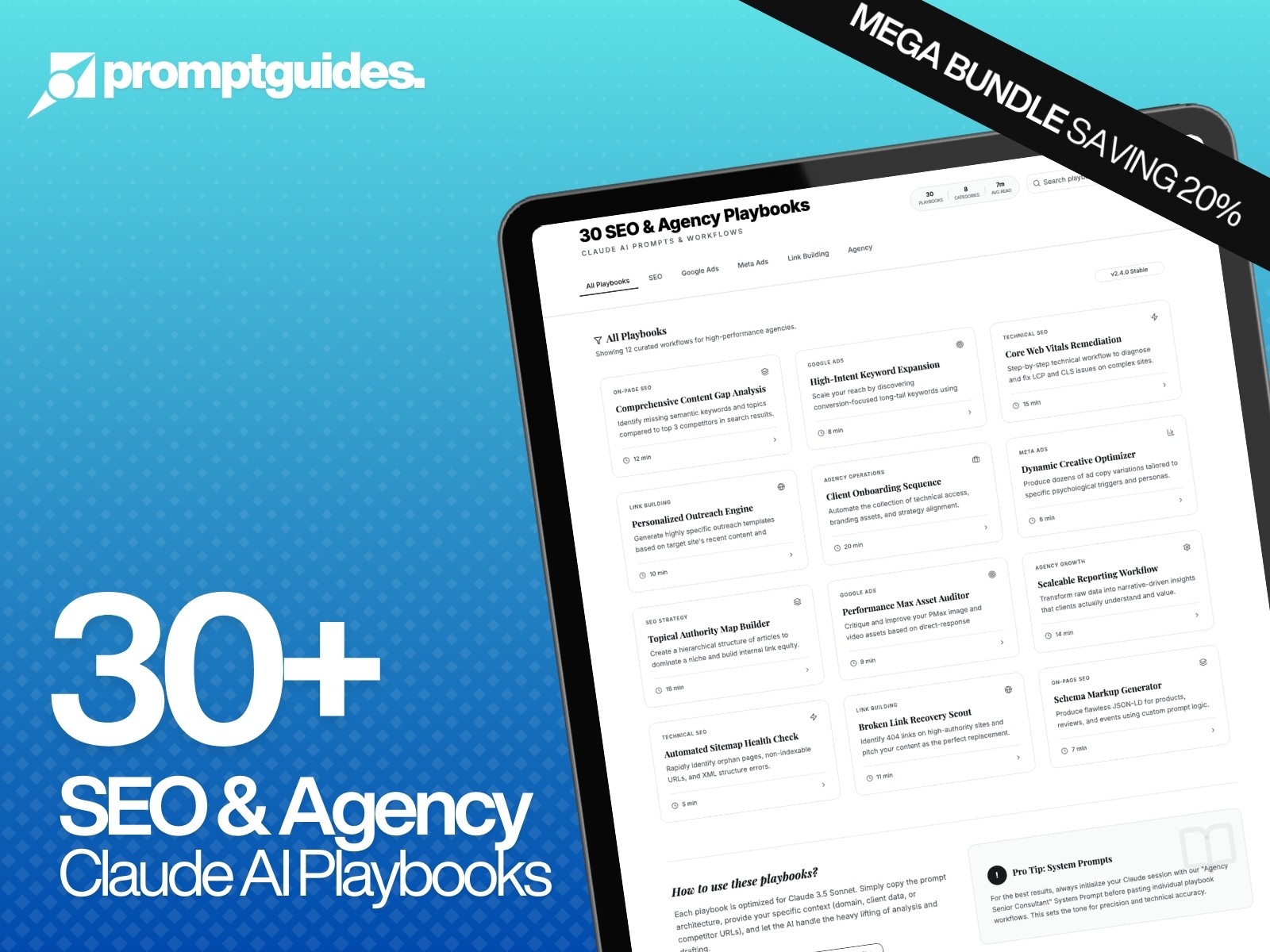
30 Claude prompts that run your agency smarter. SE...
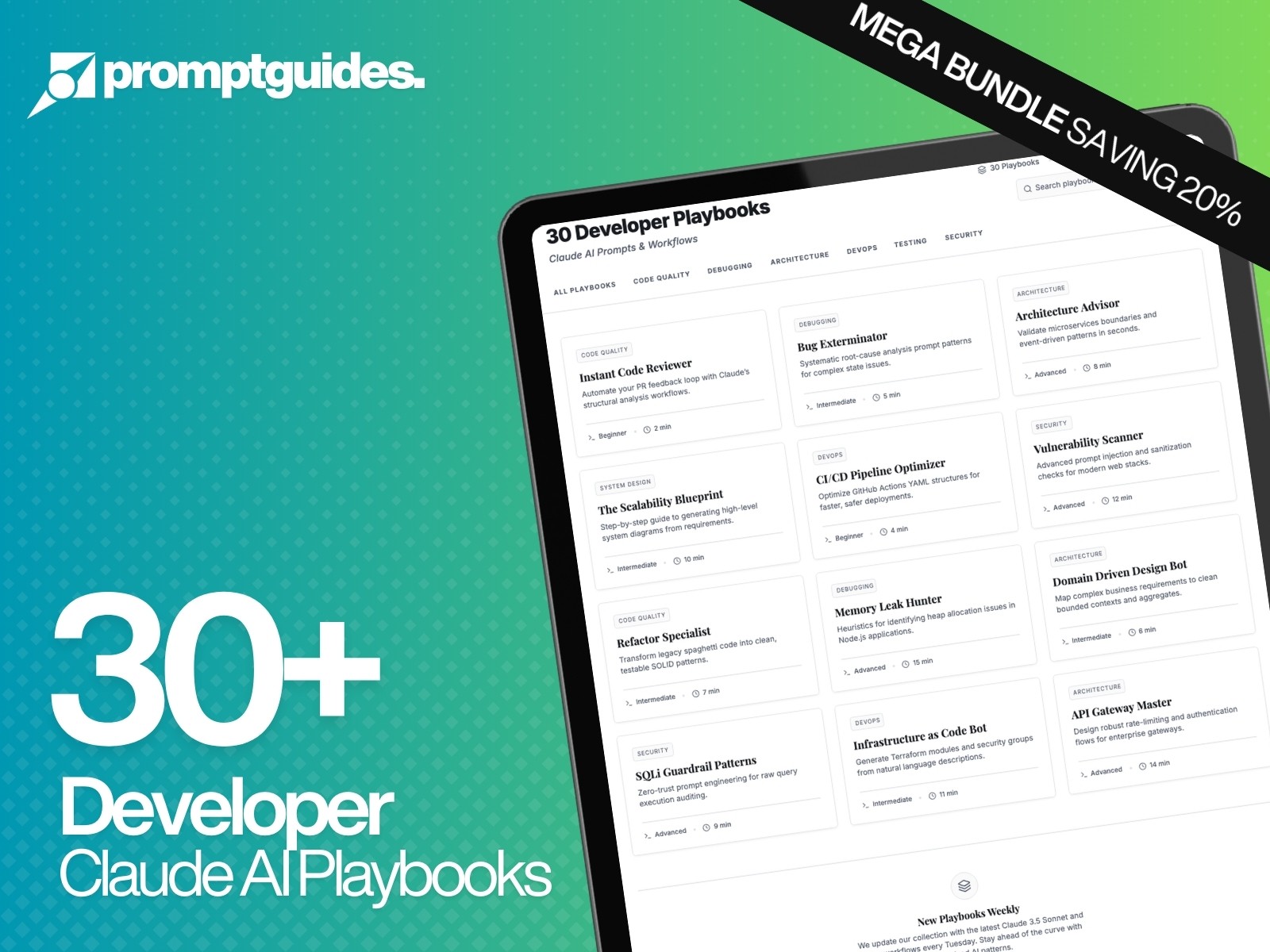
30 Claude prompts that 10x your output as a develo...
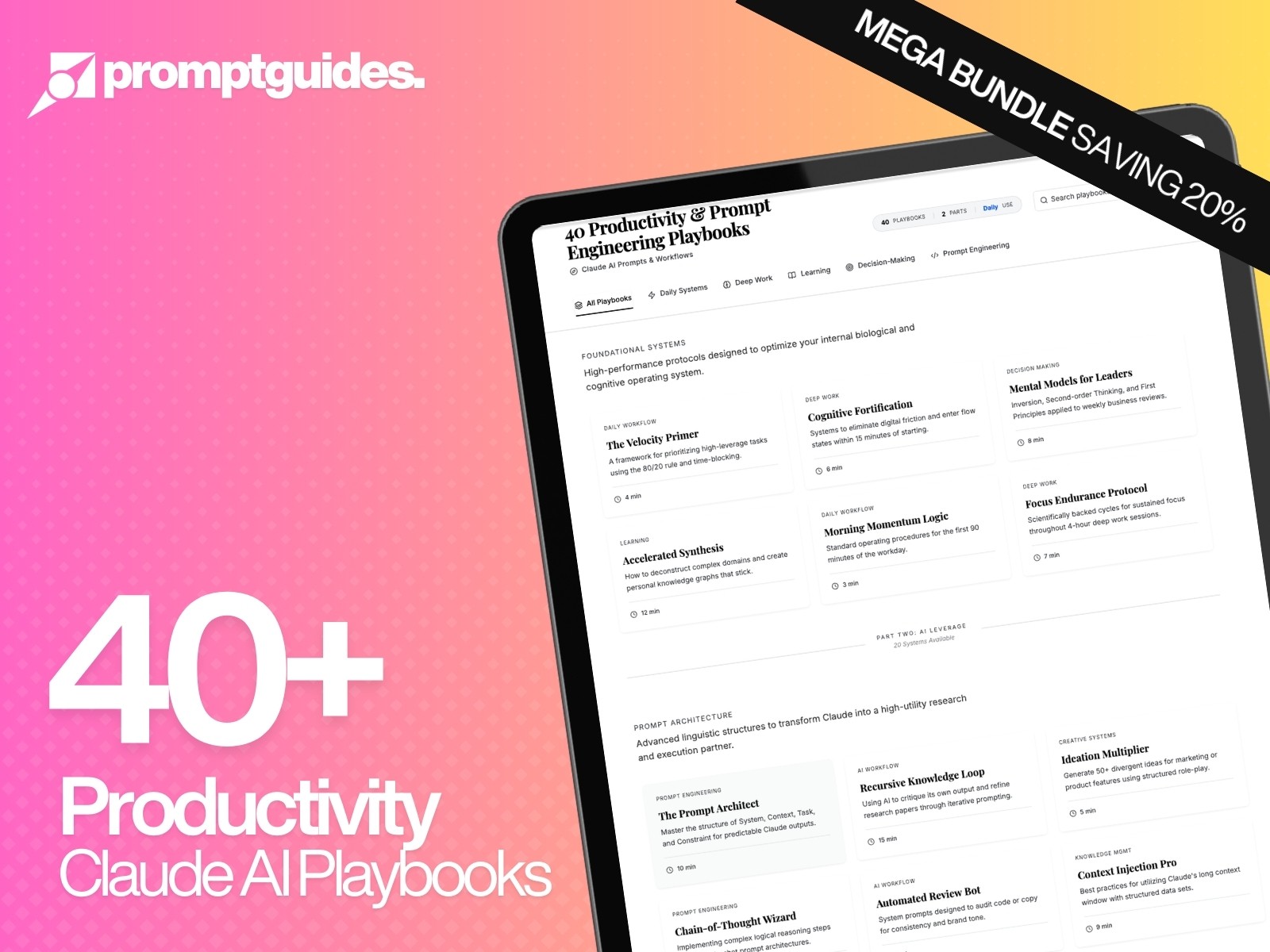
40 Claude prompts that make you think clearer, wor...
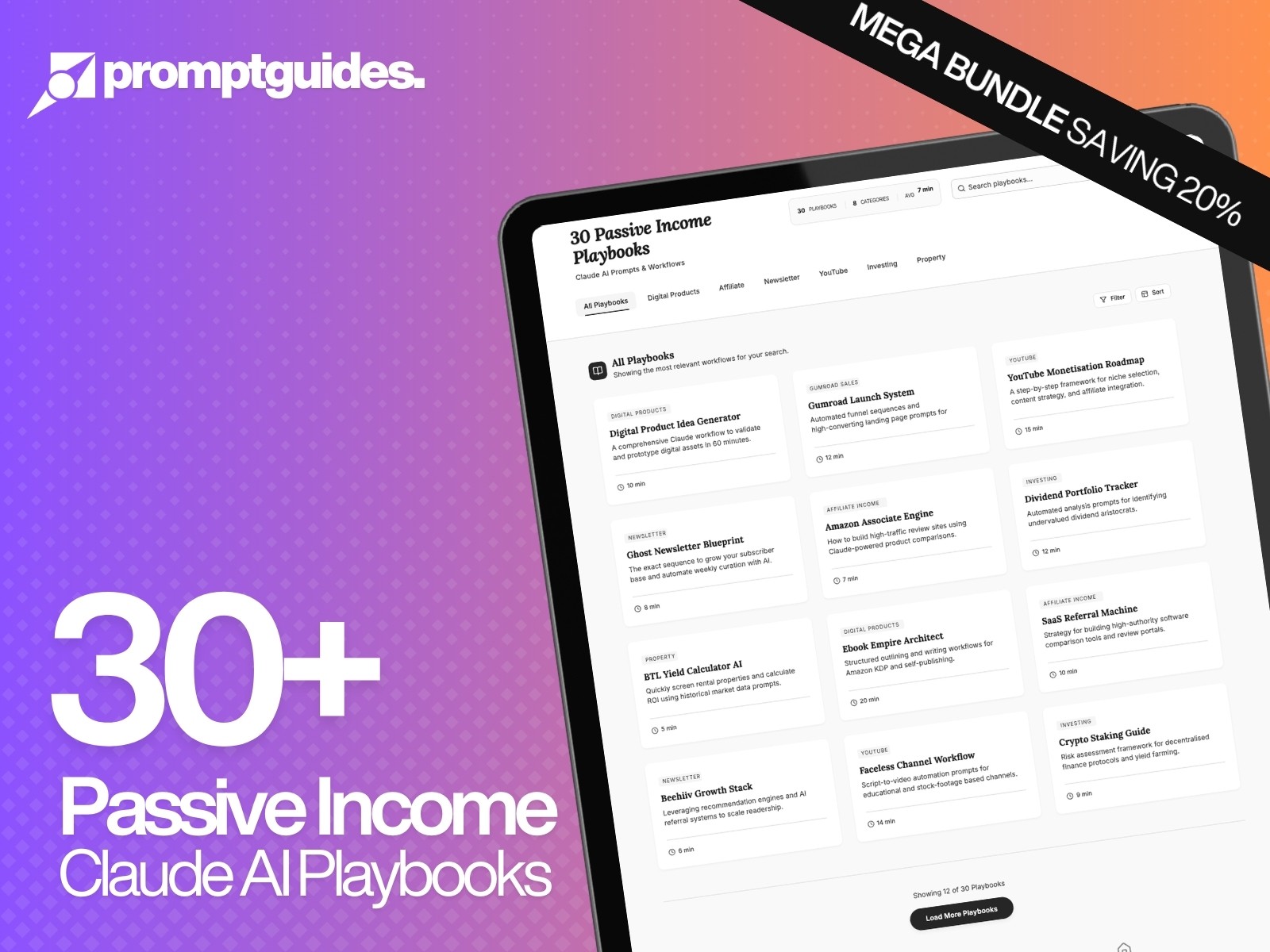
30 Claude prompts that build your income while you...